 Albert Einstein
 was born at Ulm, in Württemberg, Germany, on March 14, 1879. Six weeks later the family moved to Munich, where he later on began his schooling at the Luitpold Gymnasium. Later, they moved to Italy and Albert continued his education at Aarau, Switzerland and in 1896 he entered the Swiss Federal Polytechnic School in Zurich to be trained as a teacher in physics and mathematics. In 1901, the year he gained his diploma, he acquired Swiss citizenship and, as he was unable to find a teaching post, he accepted a position as technical assistant in the Swiss Patent Office. In 1905 he obtained his doctor's degree.


Einstein's researches are, of course, well chronicled and his more important works include
Special Theory of Relativity (1905),
Relativity (English translations, 1920 and 1950),
General Theory of Relativity (1916),
Investigations on Theory of Brownian Movement (1926), and
The Evolution of Physics (1938). Among his non-scientific works,
About Zionism (1930),
Why War? (1933),
My Philosophy (1934), and
Out of My Later Years (1950) are perhaps the most important.
einstein-tagore


Albert Einstein and Rudolf Ladenburg
 Einstein with his second wife, Elsa.
 Albert Einsteins SUMMER House
 Albert Einsteins House


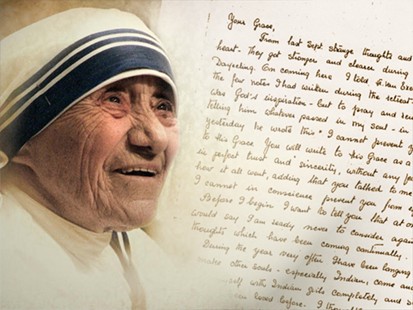
 Mother Teresa was born Agnes Gonxha Bojaxhiu in Skopje*, Macedonia, on August 26**, 1910. Her family was of Albanian descent. At the age of twelve, she felt strongly the call of God. She knew she had to be a missionary to spread the love of Christ. At the age of eighteen she left her parental home in Skopje and joined the Sisters of Loreto, an Irish community of nuns with missions in India. After a few months' training in Dublin she was sent to India, where on May 24, 1931, she took her initial vows as a nun. From 1931 to 1948 Mother Teresa taught at St. Mary's High School in Calcutta, but the suffering and poverty she glimpsed outside the convent walls made such a deep impression on her that in 1948 she received permission from her superiors to leave the convent school and devote herself to working among the poorest of the poor in the slums of Calcutta. Although she had no funds, she depended on Divine Providence, and started an open-air school for slum children. Soon she was joined by voluntary helpers, and financial support was also forthcoming. This made it possible for her to extend the scope of her work.


![[Diana04s.JPG]](https://blogger.googleusercontent.com/img/b/R29vZ2xl/AVvXsEg-A7nR5Qiurr00rx7WN320v3U_MHgwfPy7niI30NGi-tiPCf3baTsnwwEaocRJXyAE_2zhPJL9uiQy7AOhAURg8-EXytE1fNqFrLD0f7wu0-XfQvtEejZIT8ScZFGrGRVJ3h26gCpLnkGV/s1600/Diana04s.JPG)
![[s254.jpg]](https://blogger.googleusercontent.com/img/b/R29vZ2xl/AVvXsEhbj0udkBGMLUxvQvxT6jKoVjVr25n_xl_Y0p0-D9e3mzBf82ueapdCdsVK0u1J7iu4V_HBOXzUggPJTDB_edW9bxUtuZQTS9cnHw0u4gDC1YrwqI_xp40oll9RNnyJfj0Pg_9OYYfI0tHB/s1600/s254.jpg)
![[mtrp1.jpg]](https://blogger.googleusercontent.com/img/b/R29vZ2xl/AVvXsEhJBPPm1PtbBjjwWq2lPqb-k1uJaZ3UOhqEouqtN39jVg-kFymBUZweo-bCe0hBFbbCkSYs3JjyoyUS3uI33FKuwZ1b061vON7hcvir7tGyMuDPvzZCclUx1zyODA9_EbED8DWrFEvVcvY0/s1600/mtrp1.jpg)
![[mtrp2.jpg]](https://blogger.googleusercontent.com/img/b/R29vZ2xl/AVvXsEhkgHScpbdracFYk8X0y_21OD74aDEqB-X-ypiKeaRRV4zsiNrCHPTWoXOBAeAY075t5wSsWuzsgilT0H0kPvt2YXUOAthKzjbD_gqBhblqNTTZJhuueKLhRtxNkM2HnpLCDqR0EhS47O4q/s1600/mtrp2.jpg)
![[thumb.gif]](http://3.bp.blogspot.com/_JkJ4YXh4XnI/R0wfpMTMMCI/AAAAAAAAABc/WDMvFdI0PP0/s1600/thumb.gif)


 Prime Minister Indira Gandhi signing the aggreement of
 PM Indira Gandhi and her son, Sanjay
 indiragandhi-jacquelinekennedy
 looking to her father nehru.


